)
)
)
From Targets to Action: Alana Spencer on the Future of Sustainability in Construction
Chicago’s 2022 Climate Action Plan has set an ambitious goal to reduce the citywide carbon footprint by 62% by 2040, alongside a commitment to achieve 100% clean, renewable energy community-wide by 2035. The City’s climate strategy also seeks to deliver co-benefits, such as improving building performance, expanding equitable access to critical infrastructure, and supporting community health. As these targets move from policy into practice, collaboration between business, government, communities, and the built environment will be essential to turning climate ambition into meaningful action.
Helping to drive that conversation is the Midwest Sustainability Network, a community of sustainability leaders and corporate CSOs connecting public and private sectors across all industries across different states in the Midwest, including the building construction process. At the centre of that work is Alana Spencer, Co-Executive Director of the Midwest Sustainability Network and Co-Founder of Alma Environmental Partners.
We spoke with Alana about how the construction industry can move from sustainability targets to practical action, and what the next decade could look like for the Midwest.
About Alana Spencer

Alana (uh-LAY-nuh) Spencer is a sustainability and ESG leader with more than 18 years of experience helping organizations integrate climate resilience, environmental stewardship, and business strategy into transformative projects and programs. As a co-Executive Director of Midwest Sustainability Network and Co-Founder of Alma Environmental Partners, she works at the intersection of the built environment, corporate responsibility, and community impact, advancing practical solutions that create long-term environmental, social, and economic value.
1. How can organizations close the gap between ambitious corporate targets and the decisions being made by teams on the ground?
“We come across this often. A corporate goal such as net zero can be difficult to translate into day-to-day decisions at the project level. So what we like to do at not only the Midwest Sustainability Network, but also at Alma Environmental Partners, is either connect people with the types of stakeholders that can help them translate those corporate commitments into the day-to-day; or at Alma, we actually create those roadmaps and help people distill and break things down. If there's a net zero goal, for example by 2050, what does that mean for every year leading up to it, and within that year, what is the percent decrease and what makes it up? In construction, embodied carbon materials, and waste management are the key levers. We can define per-project targets that aggregate up to the annual goal, that meets the overall corporate goal by the end of the timeline. Connecting the right stakeholders and creating a year-by-year roadmap gives everyone a clear path towards the overall target.”
2. At what stage of a project should sustainability conversations begin, and what opportunities are typically lost when they are introduced too late?
“Sustainability should be a thread throughout the entire project lifecycle, whether at a corporate or building level. It needs to be part of the conversation from the beginning because it touches everything from quality and risk to environmental performance. When sustainability is not incorporated in the conversation early, you lose some of the opportunities sustainability can bring to the project, such as the implementation of different cost-saving tactics and measures that can be baked in via sustainability. When sustainability is implemented at a later stage, the different sustainability and environmental gains are not only lost, but could increase project cost, impact project schedule, and even quality.
Rather than talking about sustainable design, sustainable construction and sustainable operations, it should simply be the design, construction and operation of a building. Sustainability should be woven through the entire lifecycle of a project.”
3. Carbon reduction is increasingly influencing material selection and procurement. What needs to change for low-carbon materials to become a routine part of construction rather than a specialist or premium option?
“For any construction project where structural elements are changing, whether it’s new construction, a renovation, or a commercial interior, materials such as concrete, steel, mass timber, CLT, or rebar need to be addressed early in the project specifications.
That helps everyone understand the contractual requirements around materials and gives procurement teams enough time to plan for long-lead items. Steel, for example, often needs to be included in an early bid package because of pricing, tariffs, procurement, and lead times.
On the design side, it’s about setting clear goals. What do you want to achieve for the materials, your embodied carbon reduction? And what can realistically be achieved at cost parity with your chosen structural materials? Teams should also look at how they can reduce the overall quantity of materials without compromising structural quality.
Low-carbon materials need to be considered early, both in design and in the project specifications. Those requirements then need to flow through to procurement so teams can source the right materials and quantities to support the project’s reduction goals.
Ultimately, it’s about reducing first and then procuring, bringing design, specifications, and procurement together around the same carbon reduction goal.
Adaptive reuse can also play an important role in reducing embodied carbon because you’re retaining much of the existing structure, whether that’s concrete, steel, or other structural components. Major renovations also create opportunities to replace older systems such as HVAC and lighting, so many of the same climate resilience measures considered in a new build can still be incorporated.
In that sense, adaptive reuse already gives you an embodied carbon advantage, and from there you can focus on reducing operational carbon and making the building more resilient for the future. “
4. How can project teams make a stronger business case for sustainability, particularly when clients are facing pressure around costs, schedules, and commercial returns?
“I think we’re at a turning point in sustainability. We’re already seeing some shifts, with Chief Sustainability Officer roles changing or, in some cases, disappearing altogether. Sustainability is increasingly becoming less of a standalone function and more closely tied to quality and value within an organization.
That means looking at both the economic gains and the potential costs associated with sustainability initiatives. For example, if a company implements an ESG program, does it help improve employee retention or reduce turnover? Sustainability may be the driver, but the outcome can ultimately be measured in financial terms.
We’re seeing something similar at the project level. Different team members are increasingly taking responsibility for sustainability, and it is becoming more integrated into individual disciplines and trades. In many ways, that is the ultimate goal: for sustainability to become something everyone does as part of their role.
When it becomes ingrained in day-to-day decision-making, rather than treated as an additional requirement, it can help address concerns around cost, return on investment, and project delivery. Sustainability simply becomes part of how people work, both on individual projects and across the wider organization.”
5. Data and technology are playing a growing role in tracking emissions and environmental performance. Where do you see technology delivering real value, and where is the industry still struggling to turn data into action?
“It’s great to have a goal, and it’s also important to make sure everyone understands their individual responsibility in achieving it. But you can’t really understand your progress until you start tracking and measuring it.
There are a lot of platforms and systems available that can help with that. It can take time to find the one that makes the most sense for your organization and the specific goals you’re trying to achieve, and there definitely isn’t a one-size-fits-all solution. Many of these tools need to be customized to some degree, but the reality is that the technology is out there.
These platforms can provide real time, on demand data and help organizations understand where they may be underperforming against a particular goal or metric, whether that’s energy, water, waste, carbon, or community impact. There may still be a monthly or quarterly lag because the data has to be collected and entered, but once it’s in the system, the reporting functionality can be very valuable.
That information can then be shared with the C-suite or executive leadership so they can clearly see where progress is being made and where improvement is needed. It helps connect sustainability to the broader priorities of the business, rather than allowing it to sit in what can sometimes feel like a separate or isolated department.”
6. Climate resilience is becoming just as important as reducing emissions. How should designers, developers, and contractors prepare buildings for conditions that may look very different over their lifetimes?
“Sustainability and climate resilience go hand in hand. I don’t really see them as separate. It’s important to look at the region where you operate or where a building is going to be constructed and understand the different climate factors that could affect it over the next 25, 50, or even 100 years. We’re designing buildings for conditions as they exist today, but those conditions may look very different in 25 years. You could see a reduction in heating degree days and an increase in cooling degree days, for example.
If you only design a building’s systems around today’s conditions, they may no longer be able to meet demand 25 years from now. So, particularly if you want a structure to last 100 years or more, you need to start planning for those changes now. That means putting infrastructure such as ductwork and electrical conduit in place now so the building can adapt or electrify in the future. Make it future ready.
For other resilience measures, it’s about ensuring buildings can withstand not only today’s extreme weather, but future increases in conditions such as wind speeds and rainfall.”
7. Environmental performance, economic value, and social equity are often discussed separately. How can the industry approach them as interconnected parts of a successful project?
“When I talk about sustainability, I really see all of those things as interconnected. In a previous role at Clayco, we worked closely with the economic development team and often used a Venn diagram to show how sustainability and social equity overlap. The point was that these conversations have to happen together.
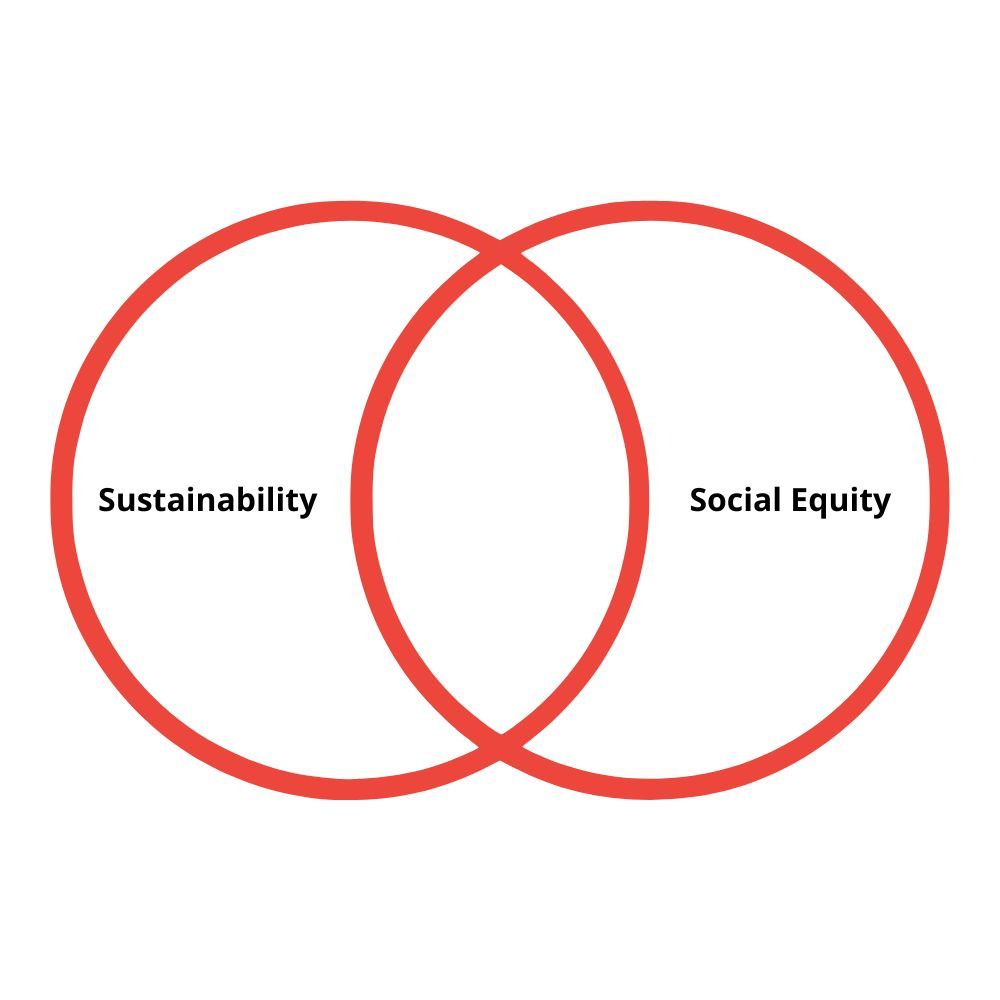
That still shapes how I approach projects today. When we talk to clients about sustainability, we also want to make sure we’re considering community impact and social equity. Questions around air quality, water quality, and other environmental issues often come directly from the communities affected by a project, so those perspectives need to be part of the conversation from the beginning.
I think a lot of people working in this space already understand that these issues can’t really be separated. If you only talk about sustainability without addressing social equity, there’s a risk that it simply won’t become part of the project.
As advisors, our role is to give clients a holistic view so they can make informed decisions about the value a project creates and how it connects with the surrounding community. That engagement is especially important on projects like data centers."
8. If we were having this conversation again ten years from now, what would you hope had changed most about sustainability in the construction industry?
“The biggest change I’d love to see is sustainability becoming part of everyone’s day-to-day role, rather than something left to the sustainability consultant after they join the call. At the moment, professionals like myself are helping with a lot of baseline support such as construction waste management plans.
If more professionals had that baseline knowledge, people like me through organizations like Alma and Midwest Sustainability Network could focus less on the fundamentals and more on higher-level carbon reduction strategies. Things like new material innovations, pilot projects, reusing waste and achieving net zero.
I recently worked with architecture students at Illinois Institute of Technology who were incorporating geothermal, solar, and hydropower into their projects. I asked whether it was a sustainability class, and they said, 'No, it’s an architecture class.' They didn’t see sustainability as separate from architecture at all. They were already doing it. That's the future."
Join Alana Spencer for “PANEL: The Future of Green Building: Getting Ready for LEED v5” on October 28, 11:00 – 11:50AM CST, on our Sustainability Track.
If you are passionate about driving change in sustainability and resiliency, sign up for our Sustainability in Construction Changemakers Ambassador Program, and start meaningful conversations with like-minded individuals.
Chicago Build Expo is the largest construction & design show in the Midwest, bringing together contractors, architects, developers, engineers, housebuilders, government representatives, and industry professionals for two days of networking, knowledge sharing, and business opportunities. The event features 30,000+ attendees, 350+ exhibitors and 450+ top-level speakers. This year, we're taking on a brand-new hall and launching 3 new zones including an AI & Digital Zone, Fire Safety & Security Zone, and a HVACR Zone powered by InstallerSHOW.
About Midwest Sustainability Network
The network of Midwestern sustainability leaders and corporate CSO's, exchanging ideas, building action plans and fostering collaboration in the heartland of green innovation.
Sources
Mayor Brandon Johnson Announces 100% Renewable Energy Milestone For City Of Chicago: https://www.chicago.gov/city/en/depts/mayor/press_room/press_releases/2025/january/mayor-brandon-johnson-announces-renewable-energy-milestone.html
City of Chicago 2022 Climate Action Plan: https://www.chicago.gov/city/en/sites/climate-action-plan/home.html
CAP Materials: https://www.chicago.gov/city/en/sites/climate-action-plan/home/get-involved.html#docaccess-5c7c300c715cc528c0ccc4e6b3a71283